

海角原创 鈥�
I had long thought about writing a book. The trouble was, I couldn 海角原创 鈥檛 decide what to write about. I tried my hand at a fantasy epic (no, you can 海角原创 鈥檛 read it), and even at a coming-of-age novel (no, you can 海角原创 鈥檛 read that, either). I 海角原创 鈥檇 considered writing something on a theme like 海角原创 鈥渉appiness 海角原创 鈥� or 海角原创 鈥渇aith and reason, 海角原创 鈥� but discovered, to both my delight and chagrin, there were already much better texts out there on the subject.
海角原创 鈥�
But Divine Providence has a way of nudging us in the right direction, occasionally even presenting us with a flashing neon sign saying 海角原创 鈥淟ook at this! 海角原创 鈥� I should have kept in mind the maxim, 海角原创 鈥淲rite the books you want to read but can 海角原创 鈥檛 find. 海角原创 鈥�
海角原创 鈥�

海角原创 鈥�
I was first hired at Kolbe to teach the sophomore year course on early Church history and the sacraments. Though I have always enjoyed history (which was my minor in college), I especially loved teaching the sacraments portion of the course. For one, learning and teaching about the sacraments easily lends itself to a systematic approach: with each one, you go over the essence, effects, foreshadowings, institution, form, matter, recipient, and celebrant (adding a few specific details with each one). I enjoyed laying out this system for the students, and seeing them quickly catch on.
海角原创 鈥�
Most profoundly, though, I loved reflecting on the way in which God used the elements of His physical creation to bring us into contact with His saving, perfecting, glorifying grace. That the Almighty would deign to give us these tremendous spiritual gifts by means of such mundane things as water, oil, bread, and wine was astounding 海角原创 鈥攁nd yet entirely fitting with what we know God 海角原创 鈥檚 modus operandi to be. After all, did He not speak to Moses from a burning bush? Did He not accompany the Israelites in the form of pillars of cloud and fire? Did He not Himself empty Himself of His divine majesty and take to Himself a human nature, becoming like unto us in all things but sin? Whereas modernism denies that God can communicate Himself or His grace through human words and physical objects and actions, our faith tells us that God indeed uses His creation as a means to give Himself to us. Teaching this class was invigorating and inspiring.
海角原创 鈥�

海角原创 鈥�
A few years after I began teaching at Kolbe, the department chair told me there was some discussion of replacing the textbook for the sacraments course. Though the text is sound and solid, it was also nearly a century old, and the fact that an ecumenical council and a liturgical reform had happened between its publication and the present day meant that the instructors were frequently having to add caveats and addenda. When she asked me if I knew of any texts that would be suitable, I said, 海角原创 鈥淲ell, I could always write one. 海角原创 鈥� It was the sort of comment one makes somewhat in jest but secretly hoping will elicit a positive response, like 海角原创 鈥淲ouldn 海角原创 鈥檛 milkshakes be good about now? 海角原创 鈥� or 海角原创 鈥淲hat do you say we move to Jamaica and live on the beach? 海角原创 鈥� And to my surprise, the response was, 海角原创 鈥淗mm, let me see about that. 海角原创 鈥�
海角原创 鈥�
To my even greater surprise, we were given the official green light. The book was commissioned.
海角原创 鈥�

海角原创 鈥�
I already had a clear outline in my mind of how to organize the book: the same basic system I had inherited from the previous text, that appeared in various forms in the Catechism, the Code of Canon Law, and many other texts besides. I didn 海角原创 鈥檛 intend to break any ground or contribute new and exciting developments to sacramental theology. I simply wanted to present the Church 海角原创 鈥檚 teaching on the sacraments, in a way that high school sophomores could understand.
海角原创 鈥�
My intention was twofold. First, I wanted to write a text that would be read alongside the relevant paragraphs of the Catechism. Thus, you will find very few citations of the Catechism in my book. Rather, I wanted to expose the students to much more of the Church 海角原创 鈥檚 tradition on the sacraments. Thus, you will see many citations to the Church Fathers, magisterial documents, and of course, my dear spiritual friend, St. Thomas Aquinas, whose writings are always a wellspring of profundity, clarity, and fidelity to the tradition of the Church.
海角原创 鈥�
Second, I wanted to provide a text that would provide answers to frequently asked questions about the sacraments. Having taught the course for a number of years, I had noticed a certain set of questions always came up: 海角原创 鈥淲hy do priests sometimes celebrate Confirmation? 海角原创 鈥� 海角原创 鈥淐ould you say only the words of institution from the Mass and still confect the Eucharist? 海角原创 鈥� 海角原创 鈥淐an anybody baptize in an emergency? Like, anybody? Really? 海角原创 鈥� Hearing these questions over the years had given me the opportunity to look up the answers and provide them in the text. I have been pleased to hear reviewers say, 海角原创 鈥淗uh, I never knew that! 海角原创 鈥�
海角原创 鈥�

海角原创 鈥�
One of my proudest moments in life was the day the hard copy of my book arrived in the mail. My children asked me, 海角原创 鈥淲hat 海角原创 鈥檚 that, Dad? 海角原创 鈥� I replied, 海角原创 鈥淎 book I wrote. 海角原创 鈥� The incredulity in their response 海角原创 鈥� 海角原创 鈥淵OU wrote a book!? 海角原创 鈥� 海角原创 鈥攚hich I take to be a sign of pride, not of doubt in my ability.
Yes, I wrote a book. I hope you enjoy it. I hope that reading it helps you to appreciate the great gift of the sacraments, just as writing it did for me.
海角原创 鈥�
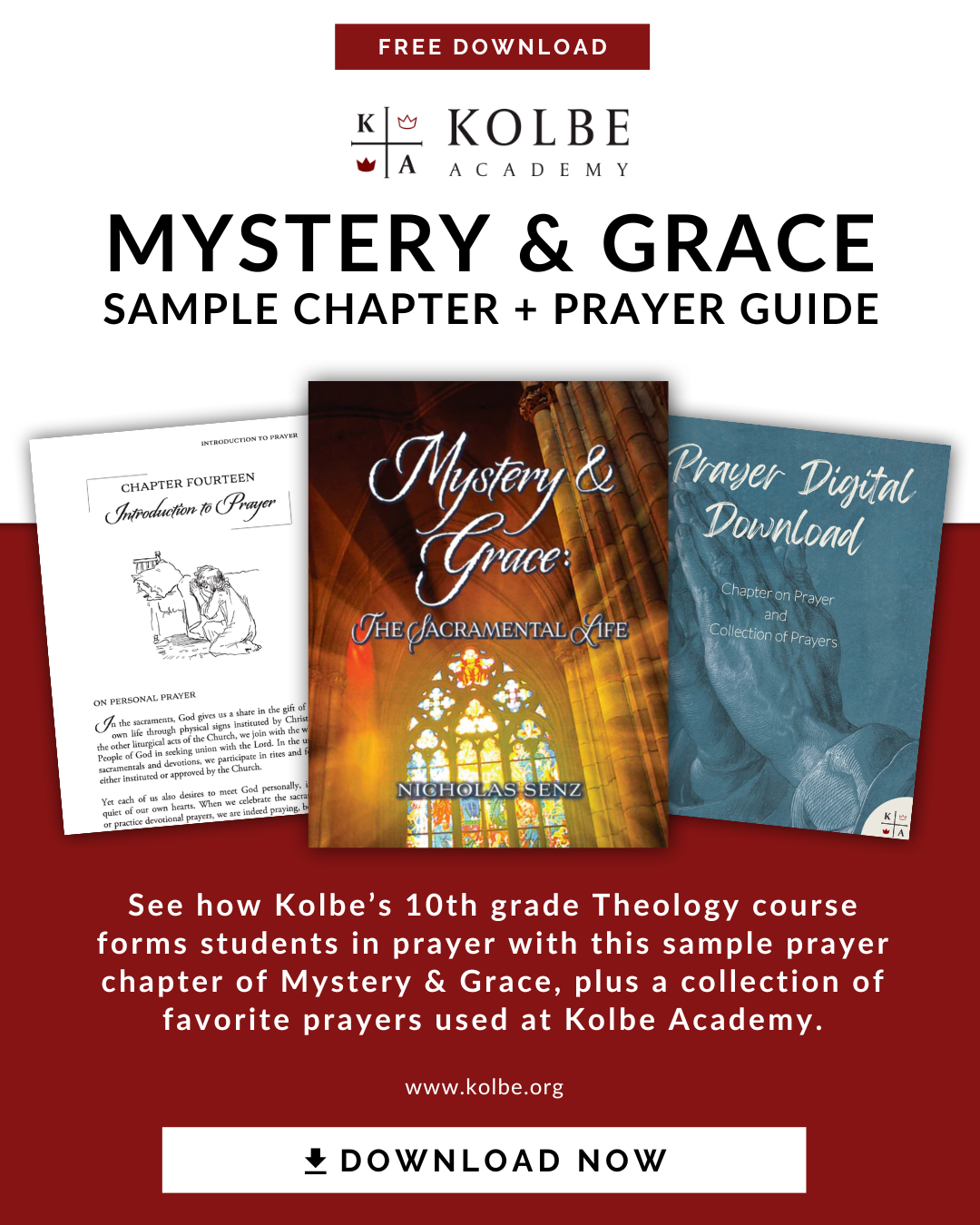
Want to explore Mystery & Grace for your student or classroom?
海角原创 鈥�
海角原创 鈥�
海角原创 鈥�
海角原创 鈥�
海角原创 鈥�
海角原创 鈥�
For a deeper look at the ideas behind Mystery & Grace and the meaning of the sacraments in the life of the Church, listen to this recent Kolbecast episode featuring Nicholas Senz and Brendan Murphy:
海角原创 鈥�
