
Education should be a cultivation of truth, beauty, and goodness. Poetry touches on all three. It develops a sensitivity to language, encourages wonder at creation, and offers a way to express what surpasses ordinary speech. Far from being an 海角原创 鈥渆xtra, 海角原创 鈥� poetry holds a valued place in Kolbe 海角原创 鈥檚 curriculum, integrated into the elementary years, intentionally studied in middle school, and engaged at the highest level within the classical canon of our high school program.
海角原创 鈥�
Poetry offers students words for what might otherwise remain unspoken. It gives structure to joy, sorrow, gratitude, and awe, allowing the heart to process emotions and the mind to contemplate mysteries. In home-based education, poetry can become both prayer and play, both discipline and delight.
海角原创 鈥�
Consider the words of Gerard Manley Hopkins, a Jesuit poet whose verses brim with Catholic sensibility:
海角原创 鈥�
海角原创 鈥�
海角原创 鈥�
A simple reading of these lines invites students into a sacramental vision of the world where every created thing reflects the Creator 海角原创 鈥檚 glory. Through memorization, recitation, and reflection, poetry like this can root children deeply in the Catholic imagination.
Poetry in 海角原创 海角原创 鈥檚 Curriculum
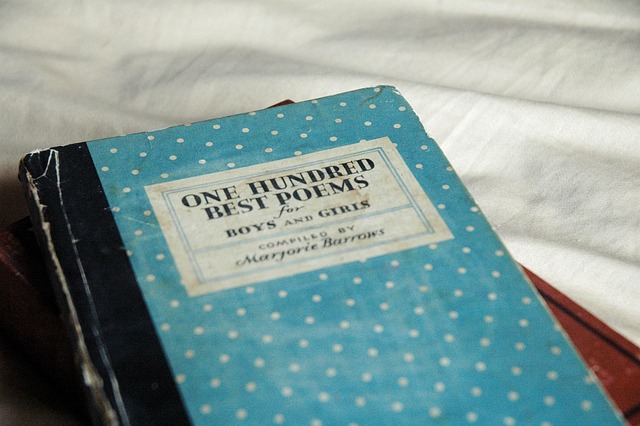
At Kolbe, poetry is not confined to a single class or grade; it flows through the curriculum like a thread of gold. We are intentionally nurturing its place in our programs, working to refine and expand how poetry is taught so that it speaks to our students with clarity and power. What follows shows where poetry currently lives in our curriculum, but expect it to continue growing as we seek to inspire young hearts and sharpen minds 海角原创 鈥攁nd perhaps spark new voices to join the great conversation in verse by setting their own pens in motion!
海角原创 鈥�
海角原创 鈥�
Elementary
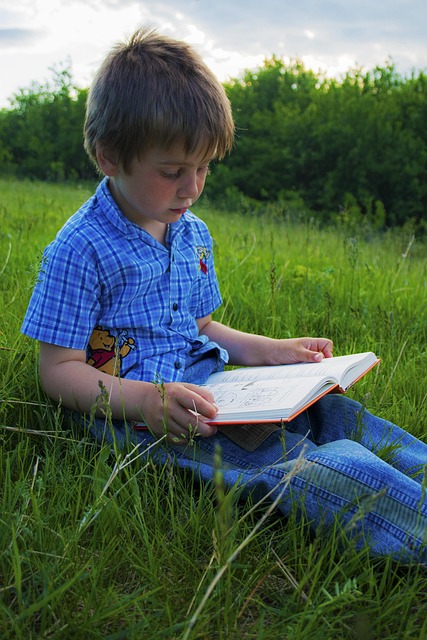
海角原创 鈥�Poetry is introduced through our literature curriculum. Students learn to recite, copy, and reflect on short poems, building both literacy and memory. Poetry in the early years is less an academic subject and more a joyful companion. Children naturally delight in rhyme, rhythm, and repetition, whether it is through nursery rhymes, psalms, or playful verses. In these little years, reciting and singing poems while moving 海角原创 鈥攕winging, skipping, clapping 海角原创 鈥攃an make poetry play and prayer. This delight is foundational. Through simple memorization, chanting, and illustration, children can develop an ear tuned to beauty and a heart inclined toward expression. The joy itself becomes the groundwork for future study. The same child who laughs at My Shadow, or wonders with Christina Rossetti at the unseen wind, will one day be ready to marvel at God 海角原创 鈥檚 grandeur with Hopkins and see Dante 海角原创 鈥檚 vision. In this way, poetry in the elementary years is both a gateway and groundwork.
海角原创 鈥�
海角原创 鈥�
Junior High
海角原创 鈥�Poetry instruction becomes more intentional and structured with guided comprehension, literary analysis, and opportunities to explore the mechanics of verse (such as meter and form) while delving more deeply into different poetic traditions and styles.
海角原创 鈥�
High School
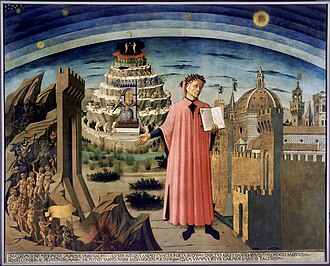
海角原创 鈥�Poetry is deeply integrated into our classical humanities program. Students encounter great epics (, , ), reflect on Aristotle 海角原创 鈥檚 Poetics, and study masterworks like , , and . Poetry also finds a home in our English Creative Writing course where students craft verses of their own in dialogue with the tradition.
海角原创 鈥�
This continuum shows how Kolbe treats poetry not as an add-on but as a thread running through the whole tapestry of a classical, Catholic education.
海角原创 鈥�
Classic Poems Across the Ages
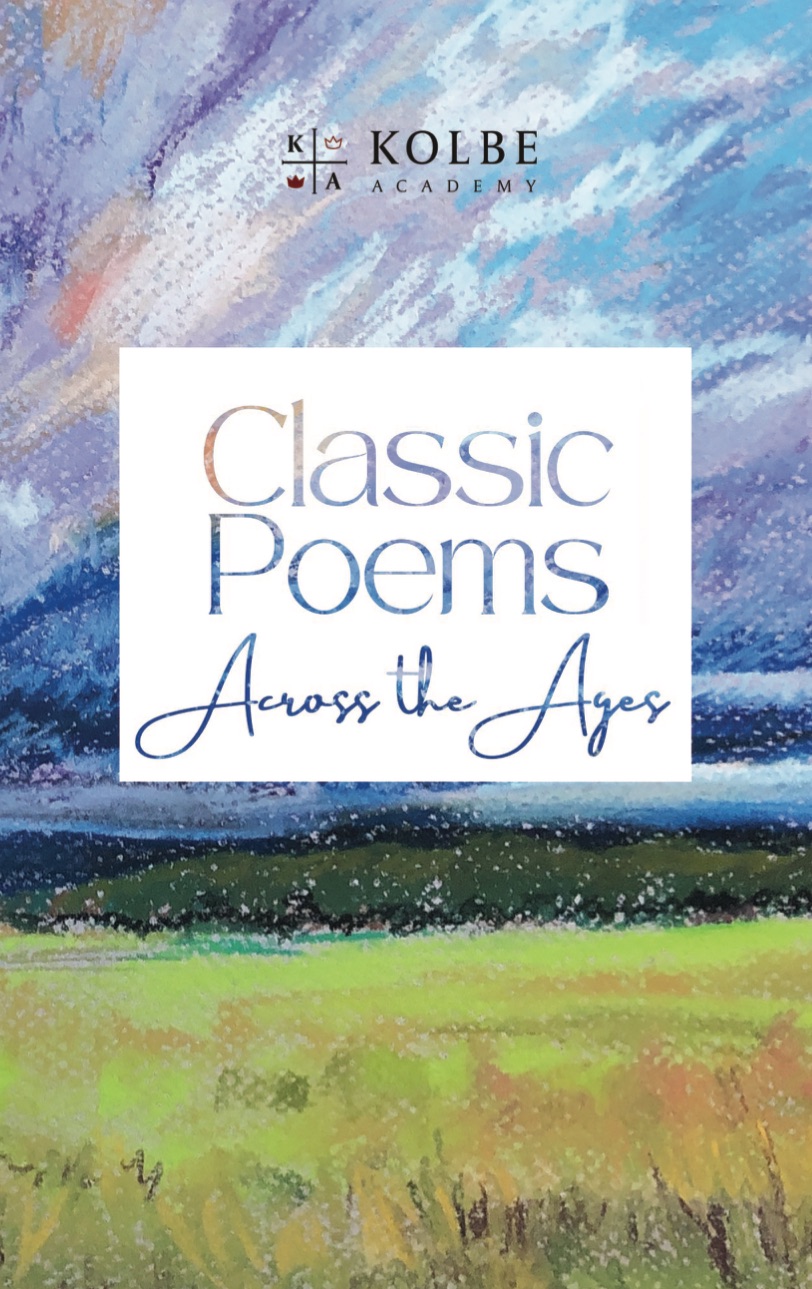
This year 海角原创 Press published a collection of poems especially for Catholic, classical homeschoolers. Our carefully curated poetry collection, , offers a rich journey through the great poetic traditions of Western civilization. Currently used in 海角原创 海角原创 鈥檚 Junior High Literature program (with some selections also appearing in Literature 6) this volume serves as an inspiring resource for families seeking to cultivate a love for beauty, truth, and the written word.
海角原创 鈥�
Organized by poetic periods, the collection introduces young readers to the historical, cultural, and literary movements that shaped poetry across centuries. From the epic verses of Homer and Virgil to the soul-stirring works of Shakespeare, Wordsworth, and Chesterton, each poem is paired with a biography that connects the poet 海角原创 鈥檚 life to his or her art.
海角原创 鈥�
海角原创 鈥�
Highlights include:
- A chronological exploration of poetry, spanning the Classical era to Modern times.
- Biographies of major poets, providing context and insight.
- Discussion of poetic forms and literary devices, deepening appreciation for artistry.
- Faith-filled reflections, drawing Catholic connections throughout.
Selections range widely 海角原创 鈥攆rom Beowulf and Chaucer to Donne, Tennyson, and Frost 海角原创 鈥攊nviting students to encounter the breadth of the Western tradition. Here is a glimpse of the voices they 海角原创 鈥檒l meet:
海角原创 鈥�
海角原创 鈥�
These lines, centuries apart, call the reader to reflect on destiny and choice, showing how poetry speaks across the ages.
Tips for Bringing Poetry into Daily Learning
Parents can weave this collection naturally into the homeschool day.
Faith & Theology
- Begin mornings with a short recitation or a Psalm.
- Spark discussion with simple questions: What image stood out to you? What might the poet be saying about God, nature, or human life?
- Invite imitation: invite students to write a psalm-style prayer.
- Make connections across subjects: read Dante in conversation with theology.
Recite a short verse before breakfast to start the day with beauty.
海角原创 鈥�
Language Arts
- Use a stanza for copywork or handwriting practice.
- Encourage imitation: invite students to write a couplet or haiku.
- Experiment with voice: whisper, sing, or read with character.
Memorize a favorite two-line poem and recite it with flair!
海角原创 鈥�
Nature & Science
- Make connections across subjects: read Hopkins alongside a nature study.
- Write short descriptive poems as nature journaling after a walk outdoors.
Capture the sights and sounds of the forest.
海角原创 鈥�
Arts & Creativity
- Invite children to illustrate lines or images from the poems they are learning.
- Pair poetry with visual art: place a painting, sculpture, or photograph alongside a poem so your child can connect words with imagery and explore both together.
- Explore rhythm musically: clap out meter or sing a stanza.
Set a poem to a simple tune.
海角原创 鈥�
Drama & Performance
- Share poems aloud as recitations at meals, family gatherings, or a special 海角原创 鈥減oetry night 海角原创 鈥� with friends.
- Act out or stage short poems using voice, posture, and gesture.
Older students can memorize and perform a dialogue poem.
海角原创 鈥�
These simple practices help students see that poetry is not just studied but lived 海角原创 鈥攕haping the way they pray, think, and imagine.
Beyond the Books
Ultimately, Kolbe 海角原创 鈥檚 poetry collection is more than an anthology, and the study of poetry throughout Kolbe 海角原创 鈥檚 curriculum is also more than an academic exercise. From the playful rhymes and wonder of the little years, through the thoughtful exploration of forms in the middle years, to the profound engagement with the classics in high school, poetry invites students to delight, imagine, and reflect. It is a way of seeing and praising. It is a way of playing with language while entering more deeply into God 海角原创 鈥檚 creation. Poetry shows how beauty and truth meet on every page. In every rhyme, stanza, and verse 海角原创 鈥攆rom the first giggle over a nursery rhyme to the awe inspired by Dante 海角原创 鈥攑oetry grows with the child. It carries delight, discovery, and devotion through each stage of learning at Kolbe.
海角原创 鈥�
海角原创 鈥�
海角原创 鈥�
海角原创 鈥�
海角原创 鈥�
海角原创 鈥�